
November 3, 2026
When you manage a property for someone else, manhattan mansion interior painting is about more than paint. In a five-story home, professional interior painting services have to be careful, respectful, and thorough across multiple floors and hard-to-reach spaces while keeping the residence livable and looking its best, which is why the property manager of this Manhattan mansion turned to C.E.T. Painting, a company that specializes in high-end interior painting in Manhattan, as a painting partner across 2024 and 2025.
For property managers and homeowners responsible for high-end Manhattan residences, this project shows what reliable, professional work looks like in an occupied home: painting and wallpaper removal, access and protection planning, work in challenging areas like a skylit garden room, realistic project costs, and what to look for when hiring contractors. In a mansion where finish quality, daily disruption, property value, and tenant satisfaction all matter, the details of how the work gets done are just as important as the final color.
Project Details
| Service | Interior Painting, Wallpaper Removal |
|---|---|
| Location | Manhattan, NY |
| Client | Property manager |
| Scope | Floors 1–5, basement, gym, enclosed skylit garden room |
| Timeline | Multiple projects, 2024–2025 |
| Investment | ~$40,000 (all projects done) |
A Long-Term Partner for the Property Manager
C.E.T. Painting was hired by the property manager to provide interior painting services for this high-end residential property and maintain the mansion’s painted surfaces. Over two years, our team painted all five floors, the basement, and an enclosed garden room under a skylight, removed failing wallpaper, and kept the home looking its best until the owner sold the property, using professional-grade paints to deliver a flawless, long-lasting finish. In Manhattan, this work also had to fit building work-hour requirements and the home’s schedule, bringing minimal disruption to daily life.
Two things made this project different from a typical home repaint:
- An occupied, high-end home. The mansion was home to a tenant, with household staff working on the property. Our crew had to work carefully and respectfully around everyone, every day.
- A hard-to-reach space. Above the living room sat a tall garden room under a large skylight, one of the most difficult areas in the house to access.
Working Discreetly in an Occupied Home
Painting a home while people live in it means the areas we aren’t painting matter just as much as the ones we are. With a high-profile tenant and household staff on site, our crew stayed respectful, kept a low profile, and worked around the household’s daily routine, with clear communication throughout the process.
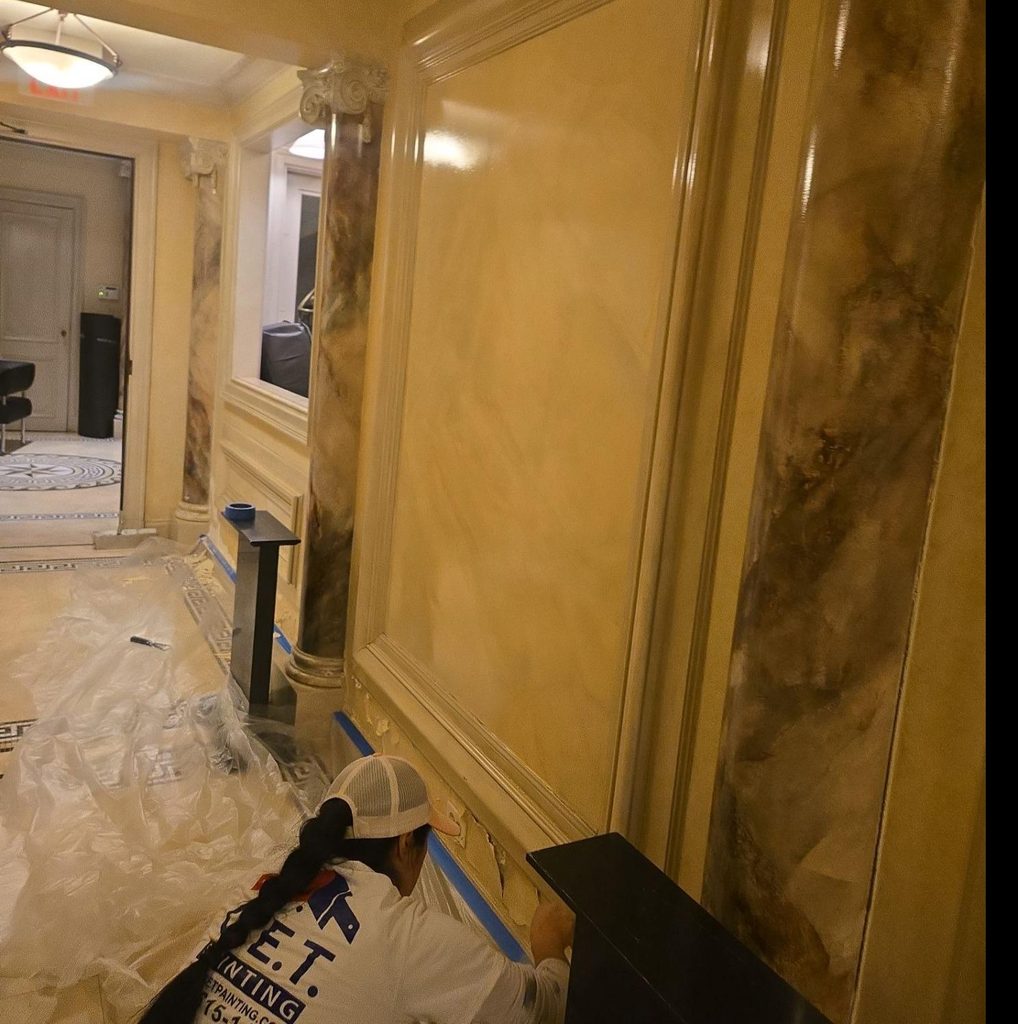
Before any work began, our team protected the home and did the complete prep needed, including patching holes and sanding rough areas where needed before painting:
- Floors were covered with paper and drop cloths.
- Areas we weren’t working on were sealed off with plastic.
- Dust and paint stayed contained to the work area, so the rest of the home stayed clean and livable.
Each area was checked room by room before final cleanup to ensure a smooth, clean finish.
Restoring the Gym Walls
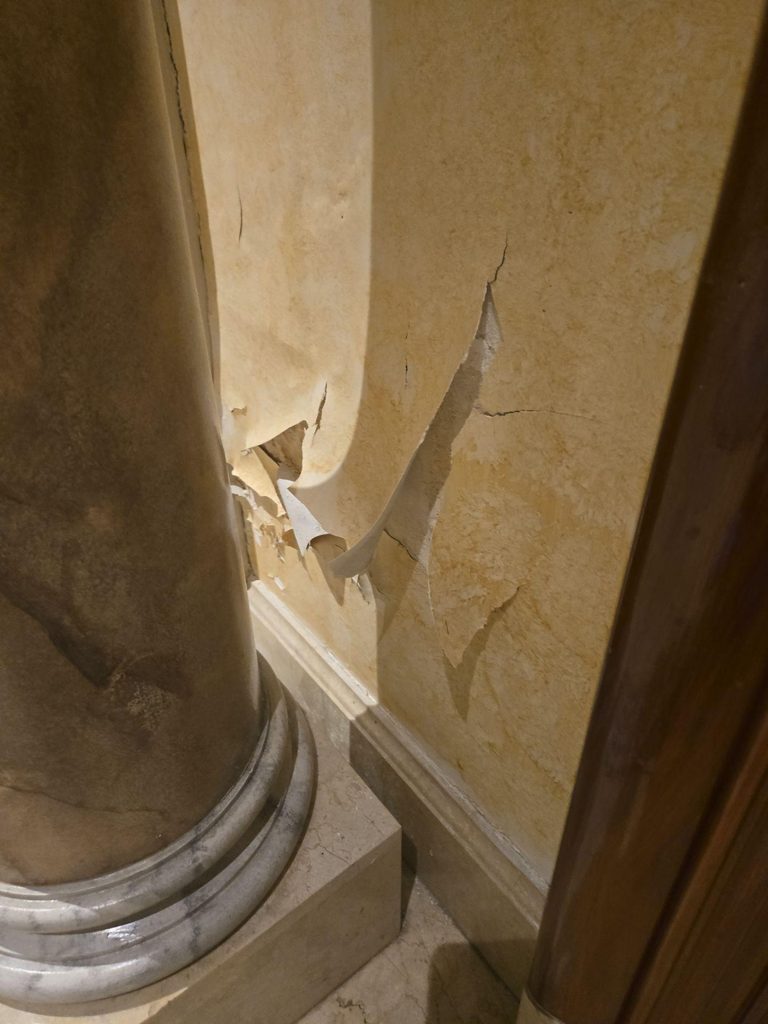
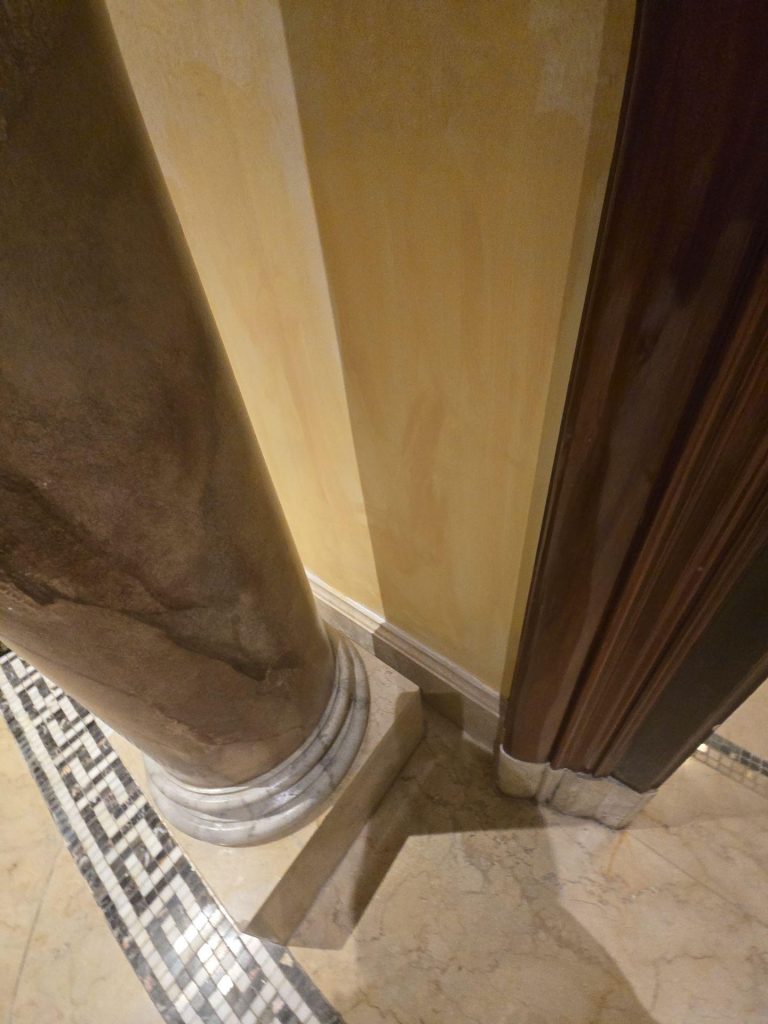
The home’s gym had wallpaper that was peeling badly, and the walls underneath needed proper care before they could look finished again. Our team removed the failing wallpaper, then handled surface preparation with cleaning, sanding, and repairs before painting, using premium materials to apply primer where needed. For lasting results, we used professional-grade primer and strong paint quality options such as Benjamin Moore for a clean, durable surface.
Five Floors and the Basement
Our team painted the interior of all five floors and the basement. Two coats of paint were done for each room to ensure an even application with close attention to detail. Ceilings and doors and trim were also included in the projects to keep the whole space looking fresh and updated, with a smooth ceiling, wall, and trim finish that suits a luxury home.
The Hardest Area to Reach: The Skylit Garden Room
Above the living room sat one of the home’s most striking spaces: a tall garden room topped by a large gridded skylight. The natural light made it beautiful, but in NYC, Manhattan light can shift dramatically depending on neighborhood and room orientation, so finish selection mattered in a bright space like this. Its height and layout also made its walls some of the hardest surfaces in the house to reach, and the peeling surfaces were in urgent need of a refresh. Our precision painting approach helped elevate the room without overwhelming its architectural character.

The result was clean, bright white walls with a subtle finish chosen to keep the tall space from feeling flat, while still letting the skylight do what it was meant to do: fill the space with light.

The Results
Across two years of work, the tenant and the property manager were consistently happy with the paint job and the team’s professionalism. This kind of transformation shows the difference careful service and responsive communication can make in a large home.
What Affects the Cost of a Paint Job Like This?
For this Manhattan mansion, the cost reflected:
- Interior painting across five floors and the basement.
- Manhattan interior painting is often priced around $3 to $7 per square foot, depending on scope and conditions.
- Wallpaper removal and wall prep in the gym.
- Extra access work for the high-walled, skylit garden room.
- Careful protection of floors and furnishings in an occupied home.
- Paint quality and premium materials also affect cost because they improve durability and a rich finish, which is why many owners choose professional painting services.
All together, the work came to approximately $40,000 across 2024 and 2025.
What Property Managers Should Look for in Painting Companies and Contractors
If you manage a property on someone else’s behalf, the painter you hire reflects on you, so compare painting companies carefully: for any occupied home or business, choose a fully licensed contractor because safety and peace of mind are paramount. Before you sign, ask:
- How will you protect floors, furniture, and areas you aren’t working in?
- How will your crew work around tenants and household staff?
- How do you handle high or hard-to-reach areas?
- Are you licensed and insured?
- What materials will you use, including premium-grade paints such as Benjamin Moore and low-VOC or eco-friendly options for homes with staff or residents?
- Can you handle ongoing work over time, not just a one-off job, and will I have a single point of contact?
Frequently Asked Questions
Can you paint over wallpaper? It’s not recommended. Painting over wallpaper can cause wallpaper to bubble or loosen, and the seams often show through the finish. Removing the wallpaper first gives the paint a clean, even surface.
Can you paint a home while people are living in it? Yes. With floors covered, unused areas sealed off with plastic, and a crew that works around the household’s routine, the rest of the home stays clean and livable during the project.
How do you paint walls that are very high or hard to reach? It depends on the space. For this project, our crew used high ladders to reach high spots. The right access plan keeps the crew safe and protects the surfaces below.
Is it better to paint a large home all at once or in stages? Both can work. Painting in stages, as this project did across 2024 and 2025, spreads out the cost and keeps more of the home usable at any given time. Painting all at once finishes the project faster.
How much does it cost to paint a large Manhattan home? It depends on the size of the property, the surfaces involved, how much prep is needed, how hard areas are to reach, and the quality of the painting services and surface preparation required. This five-story mansion came to approximately $40,000 across two years of work.
Manage a property that needs a reliable painting partner? Large Manhattan homes also benefit from a professional color plan that considers natural light, and sample boards help show how shades will look in each space. Lighter colors can make smaller rooms feel more open, while darker colors can make larger rooms feel cozier.