
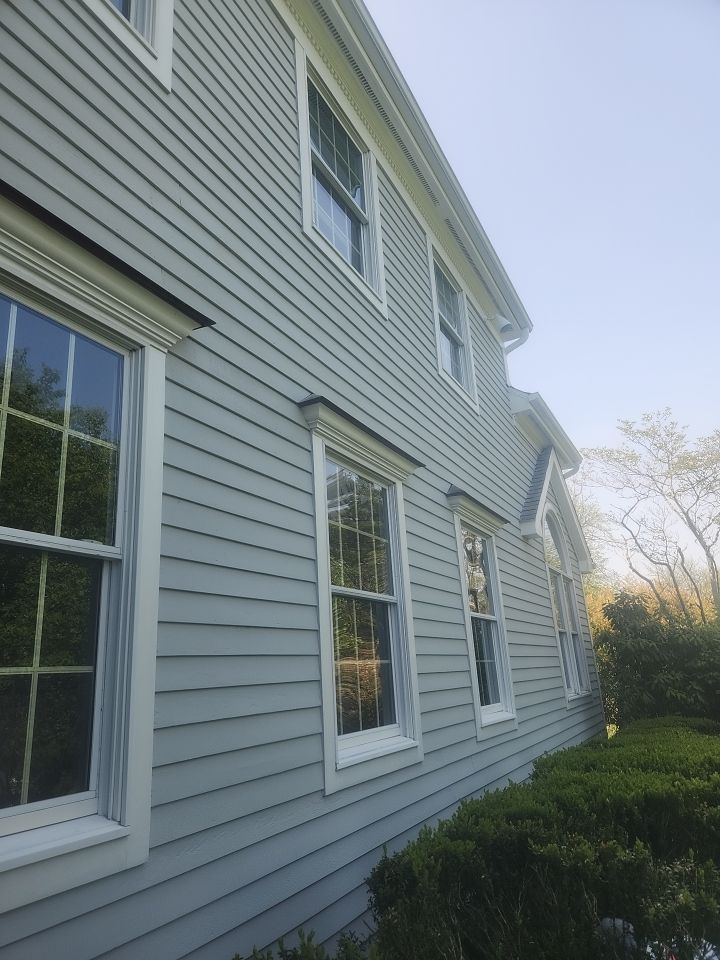
Exterior House Painting in Wilton CT | Peeling Siding Restoration
Project Type: Residential Exterior Painting
Location: Wilton, CT
Service: Exterior Siding & Trim Painting
Some exterior painting projects kick off with the homeowner just wanting a new colour.
This particular Wilton project started with something a bit more pressing: the old paint was no longer holding its own.
At a distance, the house looked in pretty good nick. The soft grey siding, traditional white window trim & the detailed roofline all gave the property a very classic feel. There was even some lovely mature landscaping. But take a closer look and it was a different story altogether. Multiple patches of siding showed signs of peeling paint, with some areas worn right back to the underlying surface.
That changed everything.
This wasn’t a project where slapping on another coat would have been enough.
What We Found Before We Even Started Painting
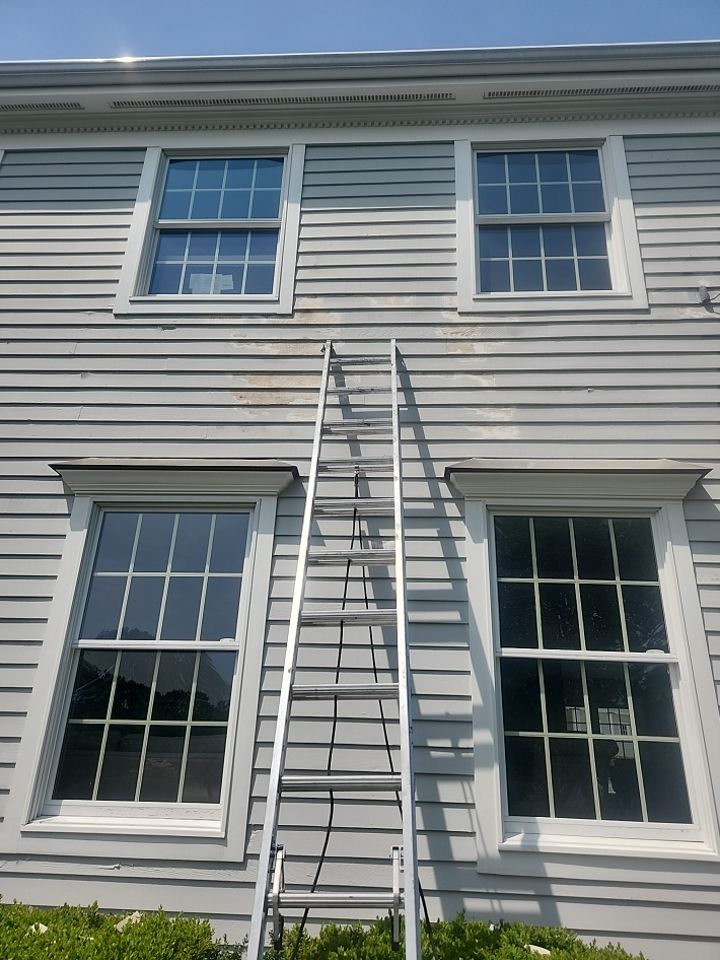


The before photos really highlight one of the most common exterior painting problems that homeowners tend to overlook.
Even though large swaths of the siding still looked okay, scattered areas around the house had some pretty significant coating failure. Some of it was just tiny patches, while other areas had big long horizontal bits where the old finish had literally come unstuck.
The upper gable was also a bit of a trouble spot. Paint had deteriorated all the way around several courses of siding under the vent, leaving some exposed areas that were especially visible once you looked up close.
You learn pretty quickly that an exterior doesn’t need to be peeling all over the place to need some serious prep work.
Once adhesion starts to fail in a few isolated areas, just slapping another coat over them can just bury the problem under fresh paint.
The Real Project Was All About Taking Out the Bad
A good exterior repaint starts with deciding what’s good to keep and what’s got to go.
Our focus wasn’t on stripping the whole house unnecessarily. We just needed to deal with the failing and unstable coating so the new finish would have a decent surface underneath it.
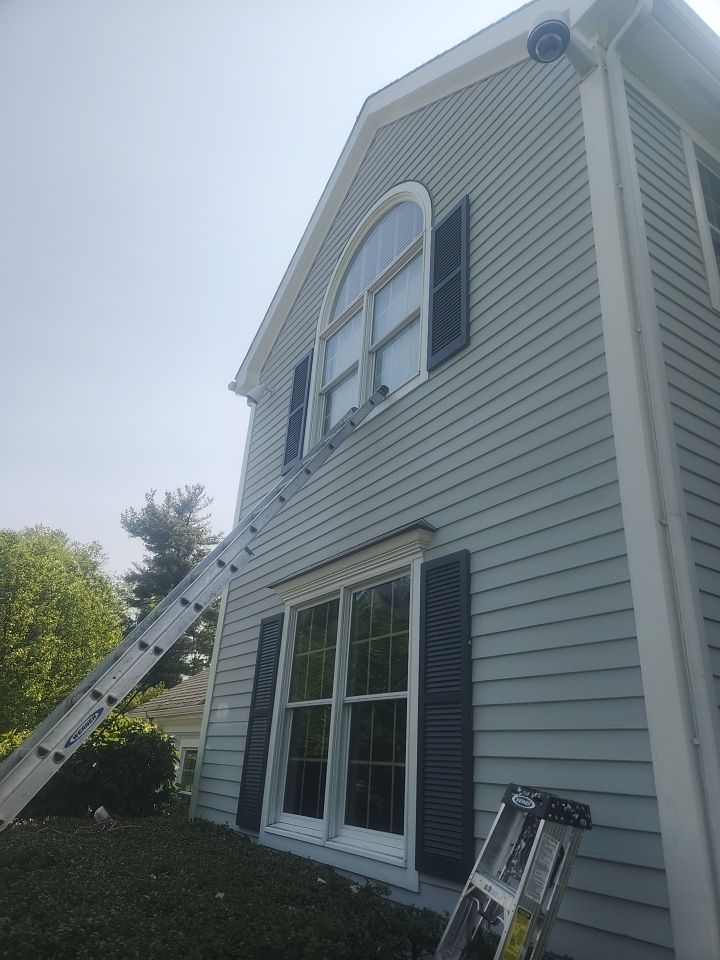
The photos we took during the prep work show ladders spread out across the two-storey elevations while we tackled the deteriorated sections one by one.
This is the bit that homeowners rarely get to see in the finished photos, but it’s arguably the most important bit.
Loose material has got to be removed.
You’ve got to prep the edges between the sound paint and the exposed substrate.
Bare or compromised areas need some special treatment before you can apply the finish coats.
Only once you’ve done all that groundwork can painting become the final step rather than just a temporary patch-up job.
Why Spot Peeling Can Be More Complicated Than It Looks
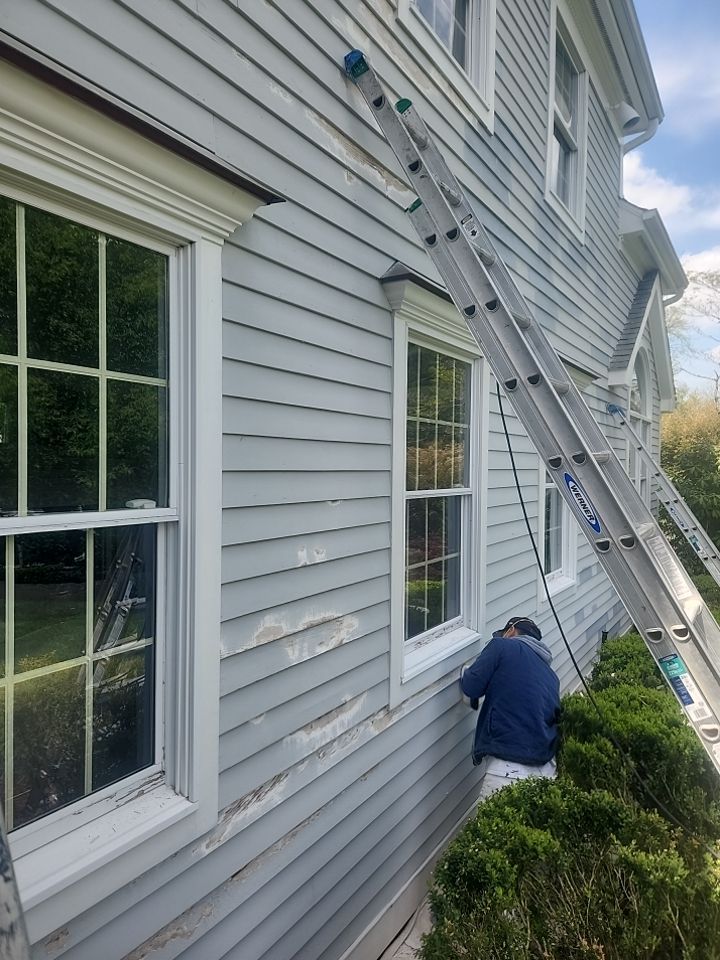
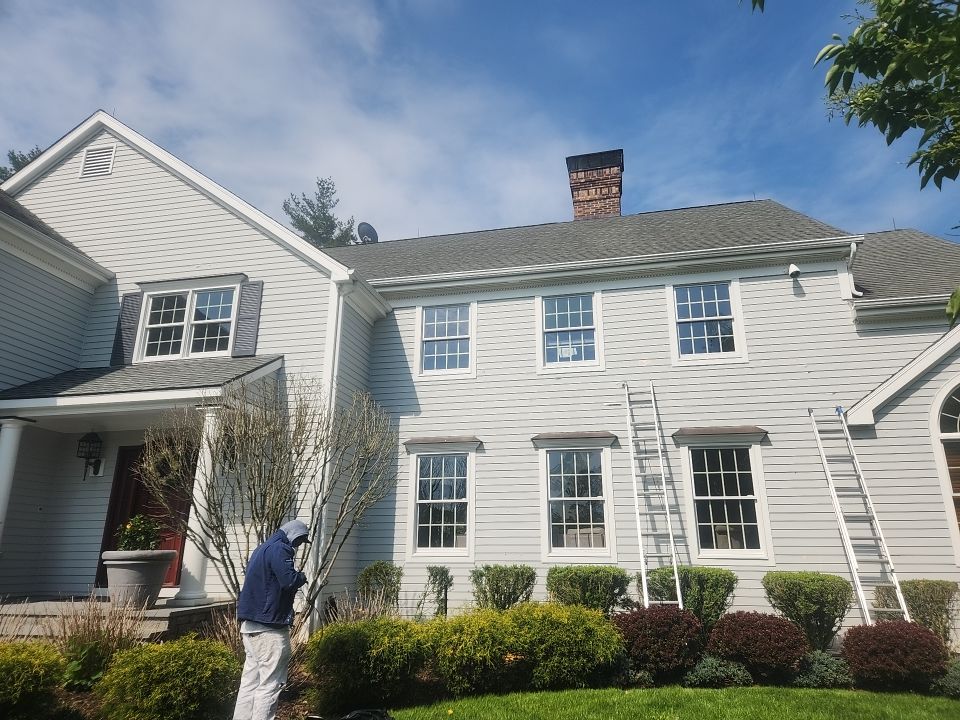

One of the interesting things about this Wilton house was the patchy way the coating was failing.
It wasn’t failing evenly across every wall.
And that’s just normal.
Different sides of a house get different amounts of sun or shade, moisture, wind or weather exposure. Architectural details can also create areas where water drains or surfaces dry differently.
So one wall might look pretty healthy while another is peeling.
For homeowners, this is why an exterior inspection should be a walk around the whole property, not just a look at the front of the house.
Pay some particular attention under windows, around trim transitions, on high gables, at joints, roof intersections and the edges of where siding courses were starting to lift.
Small failures are often the first warning signs.
Working Around A Detailed Exterior
This house also needed a lot of care around its architectural features.
It’s got a lot of multi-pane windows, substantial white casings, decorative window caps, shutters in some places, detailed cornice work & contrasting rooflines.
These elements give the exterior a lot of character, but they also make clean workmanship a lot more noticeable.
An inconsistent finish on the siding would stand out a mile next to the crisp white trim.
Our goal was therefore not just to cover the repaired bits up. We needed to make sure the completed coating visually connected those repaired bits to the rest of the elevation so the house just looked like one continuous exterior again.
The Transformation – From Patchy To Consistent
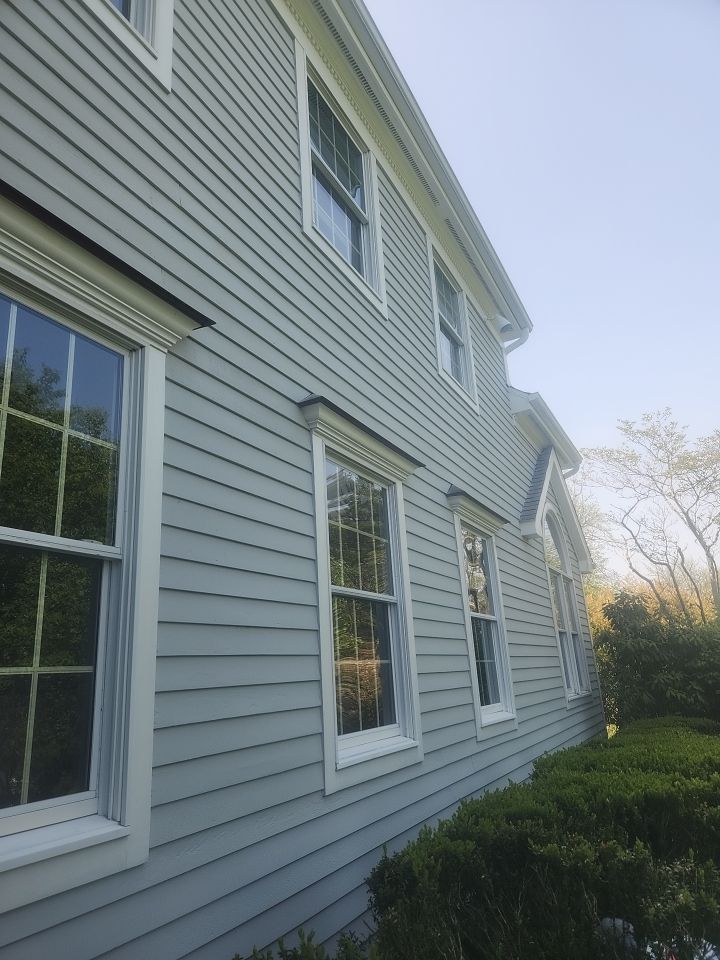
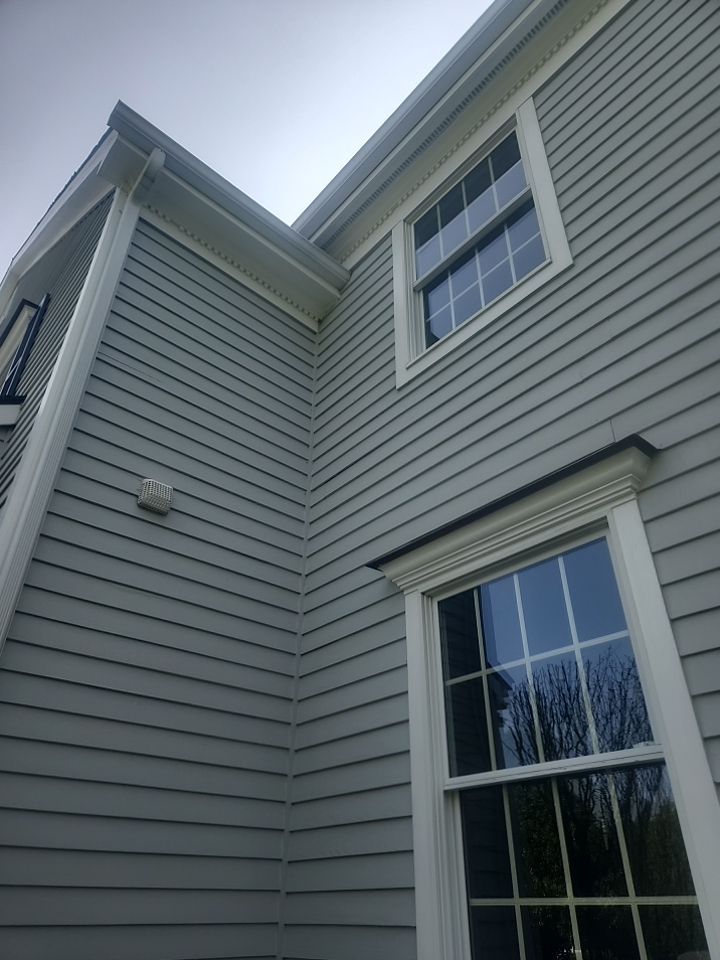
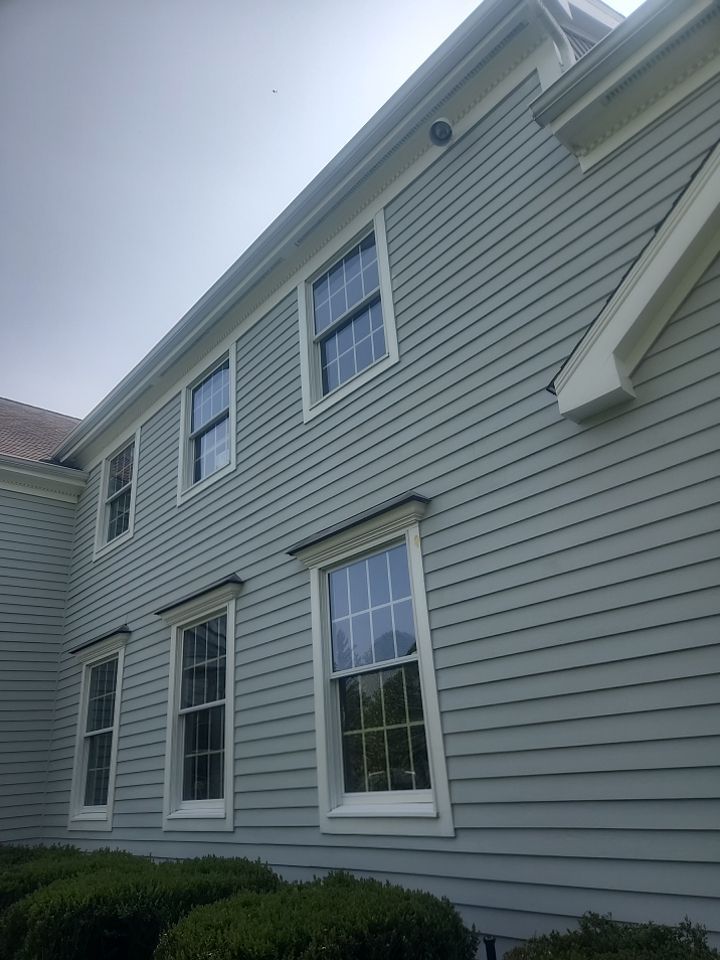
The after photos show the biggest difference clearly.
The previously exposed and peeling sections just disappear into a smooth, consistent grey exterior, while the bright white trim remains sharply defined around the windows, corners and roofline.
The upper gable that was previously a bit of a trouble spot now looks spotless.
And on the two-storey elevations, sections that were previously looking a bit patchy & worn now blend in seamlessly from one siding course to the next.
That continuity is what counts.
A good maintenance repaint shouldn’t leave any obvious evidence that the worst peeling used to be there.
Instead, your eye should just fall back on the architecture – the symmetry of the windows, the trim details, the landscaping and the overall shape of the house.
That’s exactly what happened here.
One of the Best Signs of a Good Paint Job Is What You Don’t Notice


Before the project, the damaged areas were naturally always catching the eye.
Once the work was complete, they just stopped being focal points.
And that may sound a bit simple, but it’s actually an important measure of how good the job was.
Repairs, prep work and all those problem areas should disappear into the completed exterior. The house shouldn’t look like it’s been “repaired” – it should just look well maintained.On this Wilton property, the fresh new siding gives the old place a clean backdrop for the crisp white trim and a nice contrast with the darker shutters – without changing the whole character of the house in the process.
It feels revitalized, rather than ripped to shreds and re-done.
The Homeowner Takeaway: Don’t Get Caught Waiting For It To Fall Apart On You
The biggest thing we learned from this project is that homeowners shouldn’t wait until most of the house has started falling apart to get a fresh coat of paint.
If some areas are peeling off while the majority of the siding still looks okay, that’s actually a good time to have it evaluated.
Waiting till the whole thing is a mess will turn what should be a small job into a much bigger and more expensive restoration project.
So keep an eye out for edges of the paint that are starting to curl up, bare wood peeking through the finish, the same old spots peeling again, chalky surfaces that have been weathered by the sun, and any other signs of wear, especially around windows and up high.
Those are warning signs, not just about how much the house is starting to look worn out, but about whether or not the original paint job was done properly.
A Fresh New Look Without Changing the Home’s Personality
What we love about this Wilton exterior painting project is that the result isn’t some wild new colour scheme – its the consistency that counts.
They siding looks like its meant to look again : uniform and the white trim looks great against it. Those bits that were damaged before are no longer sticking out like sore thumbs.
For a house like this, thats the right kind of transformation.
Not every exterior needs a new look after painting – sometimes they just need to look like they used to, all nicely done up and looking after themselves.
Planning Exterior Painting in Wilton, NY?
If you see areas of peeling or exposed wood on your house, don’t assume slapping on a fresh coat of paint is gonna fix everything.
What’s underneath that new paint matters just as much as the paint itself.
CET Painting does exterior painting that focuses on getting the surface right before you paint, careful attention to the details, and finishes that bring the whole house back to its best.